Skip to content


To calculate load capacity per tier for plastic racks, you need to examine the manufacturer’s specifications and consider the strength of the plastic used. Accurate calculations ensure your storage remains safe and compliant with regulations. Safety is crucial when placing products in retail spaces or coolers. Nova-day offers innovative plastic rack designs that provide robust and durable shelving solutions. By utilizing high-quality racks and adhering to proper guidelines, you can ensure the safety of both your employees and your products.
Key Takeaways
- Always look at the manufacturer’s ratings for upright, beam, and deck capacity. Use the lowest rating as your top load limit. This helps keep everyone safe.
- You need to measure tier size carefully. Measure the depth, length, and height of each tier. This helps you find the right load capacity.
- Check how strong the plastic is in the racks. Good materials make racks last longer and hold more weight. This is very important in cold places.
- Spread the weight out on each tier. Do not stack things unevenly. This keeps the racks stable and stops damage.
- Look at your racks often for cracks or damage. Check them every month. This helps keep things safe and follows the rules.
Calculate Load Capacity per Tier for Plastic Racks
When you want to calculate load capacity per tier for plastic racks, you need to follow a clear process. This helps you keep your storage safe and organized. Nova-day designs products like the Sliding Mat to give you reliable performance in both retail and refrigerated spaces. Here is a step-by-step guide to help you calculate load capacity per tier for plastic racks with confidence.
Check Manufacturer Ratings
Start by checking the ratings from the manufacturer. These ratings tell you how much weight each part of the rack can hold. Nova-day provides detailed specifications for every product, including the Sliding Mat. Look for information about the upright capacity, beam capacity, and deck capacity.
- Upright Capacity: Find out how much weight the vertical supports (uprights) can handle. This includes both the weight of the products and the rack itself.
- Beam Capacity: Check the strength of the horizontal beams. The length and depth of each beam affect how much weight it can support.
- Deck Capacity: See how much weight the shelf or deck can hold. Make sure to consider both evenly spread loads and point loads.
Tip: Always use the lowest rating among the upright, beam, and deck as your maximum load capacity per tier. This keeps your storage safe.
Measure Tier Dimensions
Next, measure the size of each tier. Accurate measurements help you calculate load capacity per tier for plastic racks correctly. You need to know the depth, length, and height of each section.
| Measurement Type | Description |
|---|---|
| Beam Length | Measure from the inside edges of the upright frames. This is the width of your shelf. |
| Upright Height | Add the height of your load plus extra space for each shelf level. |
| Vertical Beam Spacing | Check the space between each beam. More levels can change the load capacity. |
| Overall Rack Height | Make sure the rack fits under the ceiling and does not block sprinklers or lights. |
Standard rack depths usually range from 42 to 48 inches. Beam lengths often range from 96 to 144 inches. Heights can go from 8 feet to over 30 feet. Always make sure your rack fits your space and meets safety rules.
Assess Material Strength
The strength of the plastic matters a lot when you calculate load capacity per tier for plastic racks. Nova-day uses high-quality, durable plastics for products like the Sliding Mat. These materials work well even in cold environments, down to -10°C.
| Material Property | Importance in Load Capacity Assessment |
|---|---|
| Tensile Strength | Shows how much pulling force the plastic can take before breaking. |
| Flexural Strength | Tells you how much the plastic can bend without snapping. |
| Modulus of Elasticity | Measures how stiff the plastic is under weight. |
| Impact Resistance | Shows how well the plastic absorbs shocks or bumps. |
| Compressive Strength | Tells you how much squeezing force the plastic can handle. |
Always check these properties in the product details. Nova-day’s Sliding Mat is designed to handle heavy loads and frequent use, even in refrigerated areas.
Combine Loads for Each Tier
After you know the ratings and measurements, you need to combine the loads for each tier. This step helps you calculate load capacity per tier for plastic racks in real-world use.
- Spread the weight evenly across the shelf. Do not let one side carry more weight than the other.
- Avoid stacking products in a pyramid shape. This can make the rack unstable.
- Secure your products with straps, shrink wrap, or corner protectors to keep them from shifting.
When you calculate load capacity, always add up the total weight you plan to store on each tier. Make sure this total does not go over the lowest rated capacity from the earlier steps. Nova-day’s Sliding Mat makes it easy to organize and move products, helping you keep loads balanced and safe.
Note: If you are unsure about your calculations, contact Nova-day or a professional for help. This ensures you use your racks safely and get the best performance.
By following these steps, you can calculate load capacity per tier for plastic racks accurately. Nova-day’s expertise and quality products, like the Sliding Mat, give you peace of mind in both retail and refrigerated environments.
Factors Affecting Load Capacity
Material and Design
You need to look at the materials and design when you check the load capacity of storage racks. Nova-day uses high-quality plastics and sometimes adds aluminum or steel parts to make racks stronger. These materials help the racks last longer and hold more weight. The Sliding Mat from Nova-day uses a dynamic rolling system. This system lets you move heavier items easily and adjust the rack for different weights. You can also choose custom sizes and features for your racks. Some racks have locking systems and anti-tilt features to keep everything stable and safe.
- High-quality materials increase durability.
- Rolling systems help handle heavy items.
- Custom options let you match racks to your needs.
- Safety features keep racks steady.
You can use capacity charts to compare different racks and see which one fits your needs best.
Load Distribution
How you place items on storage racks changes the load capacity. If you spread the weight evenly, the racks stay strong. If you put too much weight on one side, the rack can bend or break. Nova-day designs racks with strong frames and good support points. More support points, like extra wheels or beams, help spread the weight. This keeps the racks from getting damaged.
- Use capacity charts to plan where to put heavy items.
- Place heavy items in the center of each tier.
- Check that support points are in the right spots.
Capacity charts help you see how much weight each part of the rack can hold. This makes it easier to keep your storage racks safe.
Environmental Impact
The place where you use storage racks also affects load capacity. Cold rooms, like refrigerators, need racks that work well at low temperatures. Nova-day’s Sliding Mat works in places as cold as -10°C. The plastic stays strong and does not crack. Humidity and temperature changes can also change how much weight a rack can hold. Always check the capacity charts for racks used in special environments.
Tip: Always follow the guidelines for your storage racks and check capacity charts before loading them.
Practical Example: Calculate Pallet Rack Load Capacity
Using Nova-day Sliding Mat Specifications
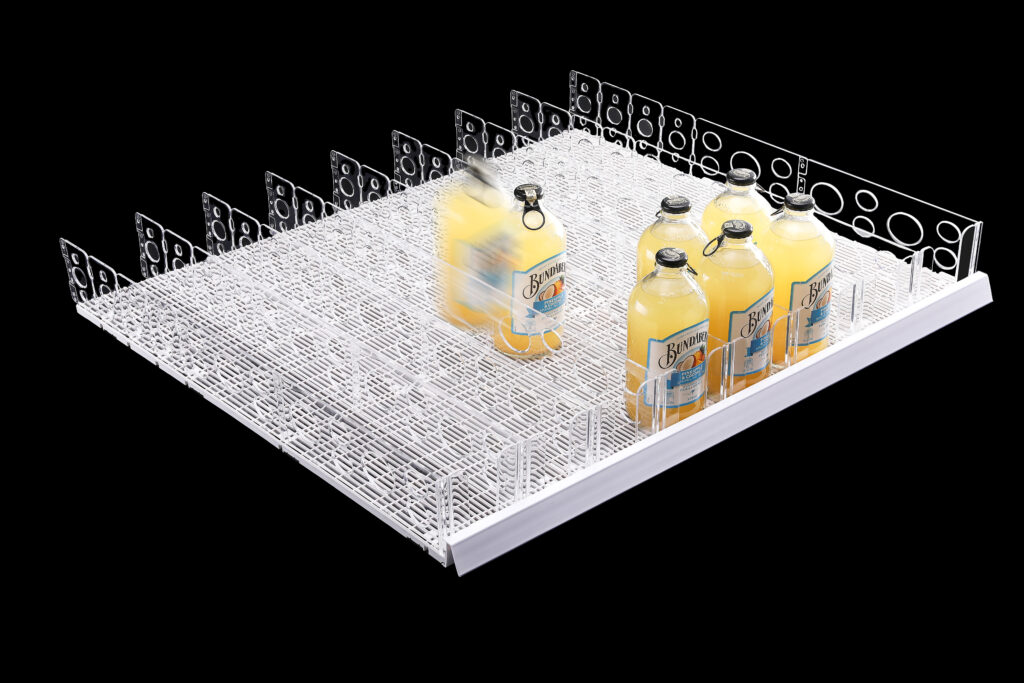
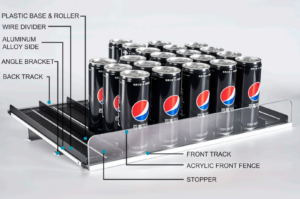
You want to figure out pallet rack load capacity for your store. First, look at the Nova-day Sliding Mat. This mat is made from strong plastic. It works in cold rooms as cold as -10°C. The mat fits shelves with a 6° or 9° slope. Each mat can hold bottles or cans. The plastic is strong enough for heavy things. You need to check the product sheet for the highest weight each mat can hold. In this example, the manufacturer says each mat holds 50 kg.
Step-by-Step Calculation
Follow these steps to find racking load capacity for one tier:
- Check the Manufacturer’s Ratings
Find the numbers for upright capacity, beam capacity, and deck capacity. For the Nova-day Sliding Mat, you see:- Upright capacity: 200 kg for each upright
- Beam capacity: 150 kg for each beam
- Deck (mat) capacity: 50 kg for each mat
- Count the Number of Mats per Tier
If you use 3 mats on one shelf, the total deck capacity is 3 × 50 kg = 150 kg. - Find the Limiting Factor
Compare the numbers for upright capacity, beam capacity, and deck capacity. The lowest number is your safe limit. Here, all are 150 kg. - Check Pallet Rack Capacity
Make sure the total weight on the tier does not go over 150 kg. This is your pallet racking weight capacity for that shelf.
Tip: Always use the lowest value from the three ratings to keep your storage safe.
Interpreting Results
Now you know how to figure out racking load capacity for your shelf. Before you put products on, remember these points:
| Key Considerations | Description |
|---|---|
| Material Considerations | Check the quality of the plastic and any metal parts. |
| Design Features | Look for strong beams and thick mats. |
| Environmental Factors | Make sure the rack works in your store’s temperature and humidity. |
| Load Distribution | Spread weight evenly to avoid damage. |
| Compliance | Follow ISO 8611 and manufacturer rules. |
| Maintenance | Inspect racks often for cracks or wear. |
If you follow these steps, you can safely figure out pallet rack load capacity and keep your products safe.
Safety and Compliance for Load Capacity
Safety Factors
You always need to think about safety when using heavy-duty pallet racking. The safety factor means you should not fill racks to their limit. It gives extra strength in case something goes wrong. For example, if a rack holds 150 kg, only put up to 100 kg on it. This extra space helps if someone makes a mistake or if the load shifts. It also helps if there is a sudden impact or the weight changes. Always follow safety guidelines and safety regulations. If you live where earthquakes happen, think about seismic loads too. The safety factor helps stop accidents and keeps people and products safe.
Inspection Tips
Checking your racks often keeps them working well. Look for cracks, bends, or rust on the racks. Make sure the load rating signs are clear and easy to see. Check that all parts are tight and nothing is loose. Watch for damage from impact load or heavy use. If racks are in cold rooms, look for problems from low temperatures. Always follow safety guidelines and safety regulations when you check racks. Use a checklist so you do not forget anything. This helps keep your pallet racking weight capacity safe.
| Inspection Step | What to Check |
|---|---|
| Visual Inspection | Cracks, bends, rust, or loose parts |
| Load Signs | Clear and correct load rating posted |
| Fasteners | Tight and not missing |
| Environment | No damage from cold or humidity |
| Weight Placement | Evenly spread, within weight limits |
When to Consult Manufacturer
Sometimes you may not know the load capacity or weight limits. Always read the load signs and check the paperwork for each rack. If you do not know the pallet racking weight capacity or maximum weight capacity, ask a professional. Never put more weight than the sign says. Always follow the manufacturer’s rules and check racks often. If you have questions about the load rating, seismic loads, or safety factor, contact Nova-day or another expert. This keeps your heavy-duty pallet racking safe and helps you follow all safety regulations.
Tip: If you are not sure about the load capacity or safety factor, ask Nova-day for help. This can stop accidents and protect your racks.
You can figure out how much each tier can hold by looking at the manufacturer’s ratings, measuring the size of each tier, and checking how strong the material is. The most important things are the material, the design, and the environment where you use the racks. Look at the table below:
| Factor | Importance |
|---|---|
| Material Selection | Needed for racks to last long and work well; it affects how much weight racks can hold and how long they last. |
| Environmental Resistance | Very important so racks can handle different places, which changes how much weight they can hold. |
| Design Considerations | Racks must be made to hold the right amount of weight so they stay safe and work right. |
Always follow Nova-day’s product rules to keep your racks safe. If you are not sure, ask a rack expert or a structural engineer for help. Checking your racks often helps them stay strong and follow osha rules for pallet racks. Nova-day’s Sliding Mat helps you use your racks safely and easily.
FAQ
How do you find the load capacity for a plastic rack tier?
You check the manufacturer’s ratings for upright, beam, and deck capacity. Use the lowest number as your safe limit. Always read the product manual or label for this information.
Can you use Nova-day Sliding Mats in refrigerators?
Yes, you can use Nova-day Sliding Mats in refrigerators. The mats work well at temperatures as low as -10°C. They keep products organized and easy to reach in cold environments.
What happens if you overload a plastic rack tier?
Overloading a tier can cause bending, cracking, or even collapse. You risk damaging products and creating safety hazards. Always stay within the recommended weight limits.
Tip: Spread weight evenly across the shelf to prevent damage.
How often should you inspect your plastic racks?
You should inspect your racks at least once a month. Look for cracks, loose parts, or signs of wear. Regular checks help you catch problems early and keep your storage safe.
| Inspection Item | What to Look For |
|---|---|
| Cracks | Any splits or breaks |
| Fasteners | Loose or missing parts |
| Load Signs | Clear and readable |