You have trouble handling inventory poorly and waste floor space. Your business needs FIFO rotation to keep stock fresh. Bad storage solutions can waste your time and money. A gravity roller shelf system is a proven fix. It cuts labor, boosts output, and uses space better. This guide helps you look at every factor, from load capacity to ROI. You will make a smart buying choice.
Key Takeaways
- Gravity roller shelving uses sloped rollers to move products forward automatically for first-in, first-out (FIFO) rotation without electricity.
- This system saves work, speeds up picking, and makes the best use of floor space by using vertical height well.
- Decide between full roller racks for heavy loads or drop-in tracks for easy installation on current shelves.
- Match the system’s weight limit to your product weight and pick materials like steel or aluminum that last in your space.
- Investing in good gravity flow shelving pays off in about 8 months by cutting labor costs, reducing waste, and boosting sales.
Understanding Gravity Roller Shelf Systems
How Gravity Flow Works
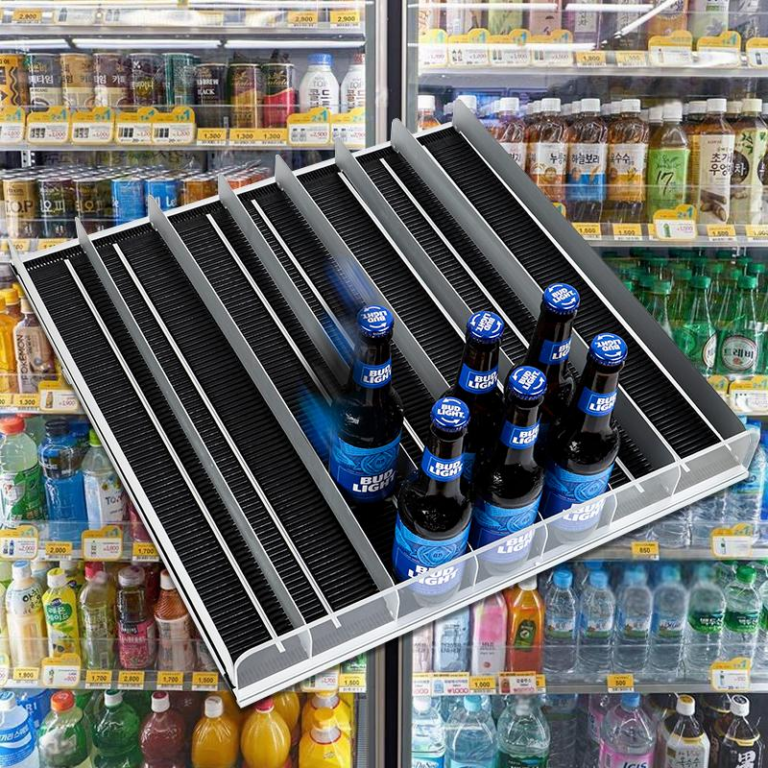
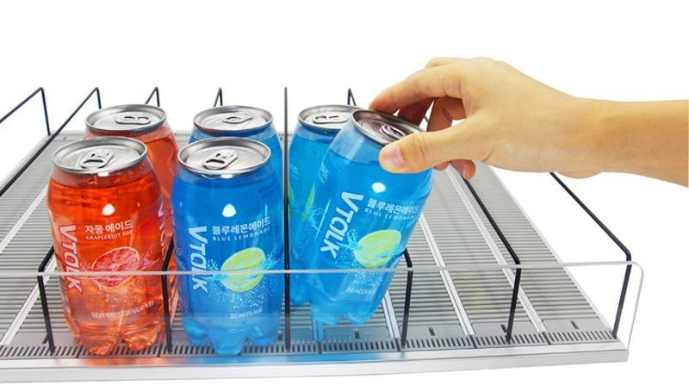
Gravity roller shelf systems use a simple principle: products move forward on inclined rollers without motors or electricity. You load items from the rear of the track, and gravity pulls them toward the front pick face. This design enforces FIFO rotation automatically because the first items you load are always the first to reach the front.
The process follows a predictable sequence:
- You place products at the rear of the inclined roller lane.
- The slope, engineered to match your product weight, allows cartons to flow forward.
- Speed controllers or brakes regulate the descent so items move at a safe, consistent pace.
- When you pick an item from the front, the next one slides into place automatically.
- Because loading happens at the rear and picking happens at the front, the oldest stock always exits first.
The optimal slope depends on what you move. Heavier loads require less incline; lighter items need more pitch to overcome friction. For example, a 10-pound tote needs a steeper angle than a 50-pound tote. You should test your actual products to find the right setting.
The right incline depends on the weight, base material, and size of what you’re moving. Too little slope and items won’t move consistently; too much and they’ll move too fast or collide, so it’s worth testing with your actual product rather than assuming a standard slope will work for every item type.
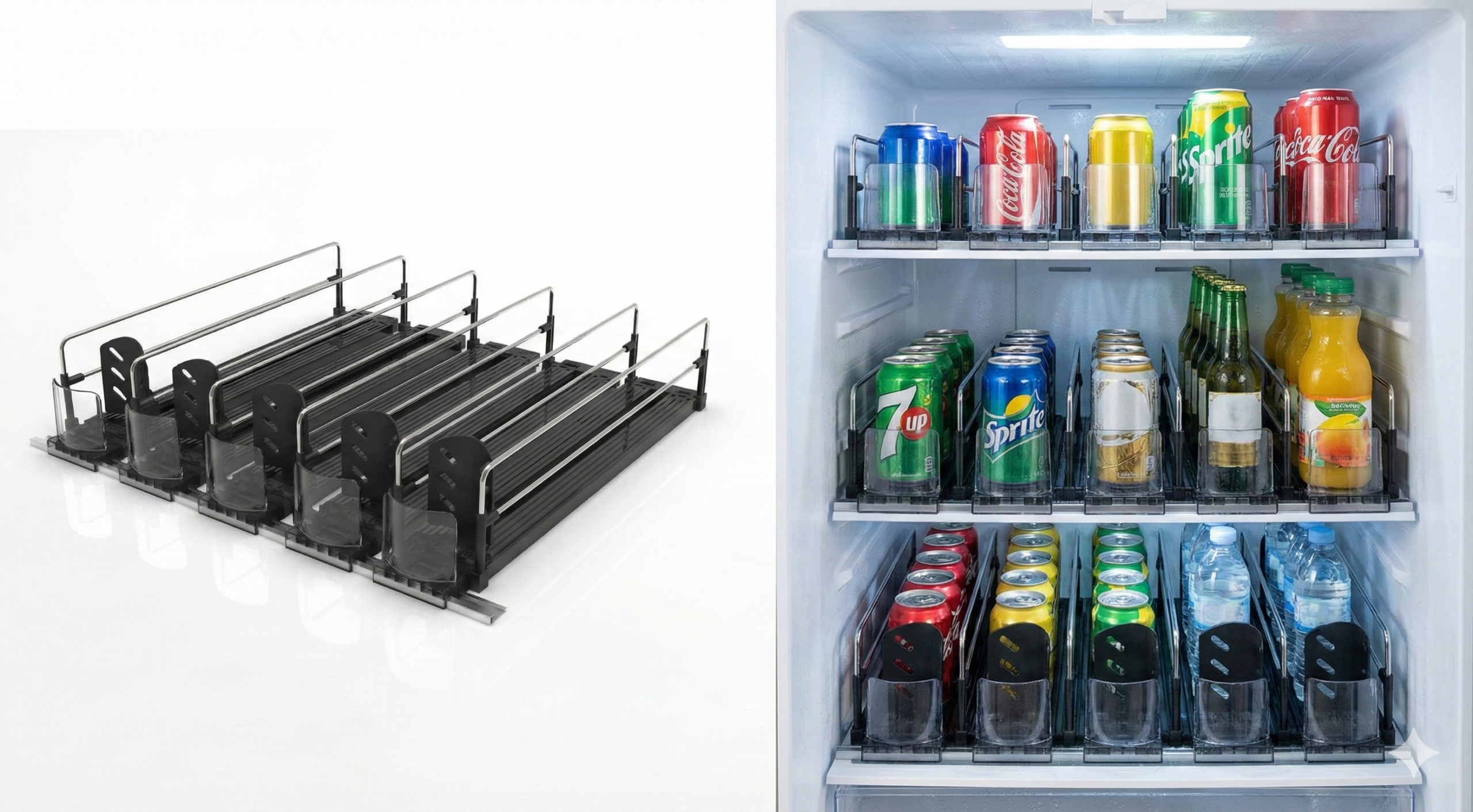
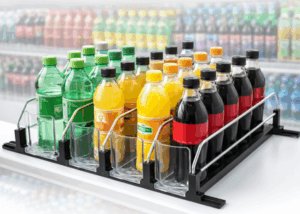
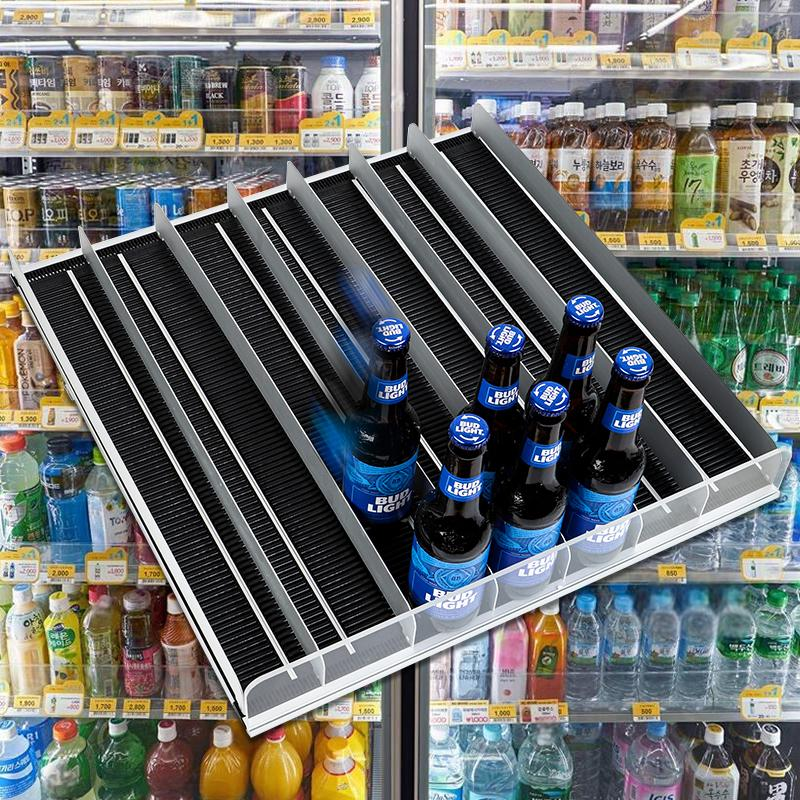
The Nova-day Gravity Shelf Roller Track System exemplifies this technology. It requires a minimum 3-degree angle and supports over 50 kg per layer. Its self-cleaning rollers remove dust during rotation, reducing maintenance. You can use it in ambient, cold, or chilled environments, making it a versatile dynamic storage system for various retail settings.
Common Applications in Retail and Warehousing
Gravity flow shelving serves many industries. In grocery and food distribution warehouses, it maintains product quality for fresh produce, meat, dairy, and canned goods. Supermarkets use it to speed up restocking and reduce packaging damage. Manufacturing facilities keep materials flowing to assembly lines efficiently. E-commerce operations meet high-volume order demands with quick, accurate picking. Medical and pharmaceutical sectors rely on it for safe, consistent stock rotation.
For your warehouse operations, this shelving system reduces labor costs because products self-front continuously. You spend less time rearranging stock and more time fulfilling orders. The system also maximizes floor space by using vertical height effectively. Whether you run a cold storage facility or a distribution center, gravity flow shelving minimizes product exposure to temperature fluctuations and speeds up movement.
This industrial shelving solution works well in stockrooms too. You can organize backstock efficiently and restock shelves faster. The durability of quality systems ensures long-term performance, even in humid environments. When you choose the right types of shelving systems, you achieve streamlined inventory management that directly improves your bottom line.
Assessing Business Needs for Gravity Flow Shelving
Inventory Type and Weight Considerations
You need to look at what products you store before choosing gravity flow shelving. Different items need different care. These product types work best with flow racks:
- Perishable goods – flow racks make sure older stock leaves first, cutting down on waste.
- Seasonal products – good rotation helps you manage items that expire or go out of style during busy times.
- Retail backroom items – flow racks use small spaces well while keeping things fast and neat.
This gravity flow shelving system fits all these items because it handles FIFO rotation on its own. You also must think about how heavy your products are. Most gravity roller shelving holds about 25-30 lbs per square foot. You need to spread the weight evenly across the roller tracks. If you don’t, some rollers may carry too much weight. This industrial shelving solution works with many package types, from light boxes to heavy cartons. Different materials need different track setups, but the system adjusts without trouble. Always check your weight needs before you pick a system.
Space and Throughput Requirements
You need to think about space and how fast you need to pick items when choosing gravity flow shelving. This industrial shelving system boosts picking speed in several ways:
- Reduced Travel Time: Products sit right at the pick face, so pickers walk less and grab more.
- Increased Storage Density: Flow lanes replace fixed spots, fitting more SKUs in the same area.
- Separated Workflows: Loading from the back and picking from the front keeps restocking and picking from getting in each other’s way.
- Improved Organization & Visibility: Items line up on their own, so workers see everything and make fewer mistakes.
- Enhanced Ergonomics: Products sit at a good angle and height, so workers strain less and pick faster.
Gravity flow racks move products to the picking end by themselves. This cuts down on manual work, speeds up picking, and makes the whole warehouse run better.
Gravity flow shelving also helps you pack more into your space. You can store more items in less room and still reach them easily. That makes gravity flow shelving a great option for busy warehouses. Always check your space and speed needs before you finalize your plan. Good planning helps you get the most value from your purchase.
Comparing Gravity Roller System Types
Roller Racks Overview
Roller racks are the classic way to set up gravity flow shelving. These systems use rollers that go all the way across a frame, making a smooth surface for products to slide on. You often see them in warehouses where pallets or big boxes move through distribution centers. The rollers sit on a slight tilt, so gravity moves items forward without any power.
Keeping these systems working well takes regular care. Start a maintenance log and schedule from the very first day. Check the system visually a few days after setup, looking for loose parts and dirt. Look again after one month, then every three months after that. Each time, check for damage from forklifts and clean the rails and rollers. Use WD40 to get rid of moisture and grime, then add a medium-weight oil if the system deals with dust or corrosive materials. Test the pallet separators by emptying the lane and pressing the separator by hand to make sure the stopper drops below the wheel level. Check the impact areas for broken or missing rollers, then swap them out by loosening the bolt, sliding it out, and tightening everything back up.
These common types of industrial shelving handle heavy loads well. They work best for operations that move large amounts of similar products. The full roller surface cuts down on friction, so items flow easily even when there’s a lot of weight pushing from behind.
Drop-In Tracks Overview
Drop-in tracks give you a more flexible option for gravity flow shelving. These systems fit right into your current rack structures, turning regular shelves into dynamic storage without needing new shelving units. You can use them on any shelf, making them a smart upgrade for what you already have.
Putting them in is easy because the rolling-track system fits right into your existing shelves without any hassle.
The Nova-day shelf roller track is a great example of this drop-in design. You put it directly into existing gondola frames or refrigerator shelves. The system works with any shelf, so you can update your current racks without big changes. Each track holds up to 50 lbs per foot, depending on how much your existing shelf can support. This design works with the shelf’s limits instead of fighting them.
Drop-in tracks give you several benefits over full roller racks. You save money by using your current shelving setup again. You also get the freedom to change only certain parts of your store or warehouse. Installation takes minutes, not days. You can move tracks between shelves when your products change.
These shelving options fit retail spaces where products change often. Drinks, dairy, frozen foods, and health items all work well with this setup. The tracks work in room temperature, cold, and chilled areas, giving you one solution for many departments. For industrial shelving needs, drop-in tracks offer a budget-friendly way to add gravity flow benefits without swapping out your whole racking system.
Key Selection Criteria for Industrial Shelving
Load Capacity and Material Selection
Before you buy, match the gravity roller shelf to your real product weight. The Nova-day shelf roller track holds over 50 kg per layer. That covers most retail and warehouse items. But check that your current shelves can handle that same load. The track works with the shelf’s limits, not against them. Look at the manufacturer’s rating for both parts before you decide.
The materials you pick affect durability and long-term cost. Steel lasts the longest, often for decades. Over 85% of it gets recycled in the U.S. Aluminum resists corrosion well. It lasts longer than untreated steel in humid places. Both options are fully recyclable. For lighter goods, plastic rollers offer a low-cost choice that still works well. Heavy-duty steel rollers handle extreme loads and harsh conditions without breaking.
| Material | Key Durability Properties |
|---|---|
| Steel | Longest-lasting storage solution; can remain in use for several decades; over 85% recycled in the U.S.; can be repurposed indefinitely without losing integrity. |
| Aluminum | Lightweight yet incredibly strong; excellent corrosion resistance; lasts longer than untreated steel in humid or corrosive environments; highly recyclable with low environmental footprint. |
Think about your environment when choosing materials. Cold storage creates condensation, so you need anti-rust options. The Nova-day system uses 100% new materials and resists rust in humid settings. It also handles temperatures up to 85 degrees, making it good for chilled areas. Your product weight and shelf setup decide whether you need steel, aluminum, or plastic rollers.
FIFO Capability and Safety Features
Gravity flow shelving enforces FIFO rotation on its own. You load cartons from the rear, and they slide forward on inclined tracks. Older inventory reaches the pick face first. So date-sensitive products leave before newer stock. This design cuts spoilage and waste without extra labor. Each SKU stays in its own lane, and reserve stock refills the pick face continuously. You keep steady rotation with little manual effort.
The system also keeps your pick aisle clear. Loading happens on one side, picking on the other. Workers never crowd each other. This separation improves order picking accuracy and reduces congestion. For perishable goods, this automatic sequencing is very valuable. You remove the guesswork from stock rotation.
All flow racks (including gravity roller shelving) are tested and certified by TÜV Rheinland, a recognized independent safety certification body.
Shelving safety matters as much as performance. Look for systems that meet independent certification standards. The TÜV Rheinland certification confirms the racking system passes strict safety tests. This certification gives you confidence that the equipment protects your workers and your products.
You can measure the success of your industrial shelving investment with clear metrics:
- Cost per pallet position – measures the capital efficiency of the storage investment.
- Net increase in storage density – quantifies how much more product you can store in the same footprint.
- Measurable reduction in order picking times – tracks operational speed improvements.
- Minimization of travel distance for forklift operators – reduces labor and fuel costs.
- Maximization of accessible cube space – ensures vertical and horizontal space is fully utilized.
These common types of industrial shelving systems deliver measurable returns. You track your weight capacity needs, evaluate your storage density, and monitor picking speed. The Nova-day system includes optional dividers, such as aluminum or black dividers, to separate different product types. You can customize lanes for beverages, dairy, or health items. This flexibility helps you maximize every inch of shelf space.
Your industrial shelving choice should balance capacity, durability, and safety. The right system reduces waste, speeds up operations, and protects your team. When you evaluate options, test with your actual products. Confirm the slope works for your item weights. Verify the materials suit your environment. Then you can invest with confidence, knowing your gravity flow shelving will perform for years.
Cost Analysis and ROI for Gravity Roller Shelving
Upfront and Long-Term Costs
You need a clear cost picture before buying gravity flow shelving. The upfront price covers more than just the tracks. Many factors shape your total investment.
- System type premium: Pallet flow racks cost more because they use gravity-fed rollers and need expert setup.
- Material quality: Rust-resistant materials like galvanized finishes can raise upfront costs by 15–25%. They last longer in humid or temperature-sensitive places.
- Labor and installation: Skilled, certified crews cost more upfront. They cut down on delays, rework, and long-term maintenance problems.
- Compliance and permits: Set aside 5–10% of total installation cost for seismic sign-offs, load certifications, and fire marshal inspections.
- Hidden costs: Compliance upgrades, future reconfiguration, downtime during installation, and ongoing maintenance all add to total cost of ownership.
Your product specs also drive component costs. Think about these factors when planning your budget:
- Pallet and product specifications: Exact load size, weight range, and pallet condition decide roller type and lane width. These choices directly affect component costs.
- Lane configuration: Lane depth and width balance storage density against flow reliability. Deeper lanes for high-volume SKUs boost density by 50%+ but need more rollers and brakes.
- Rollers, wheels, and brakes: Full-width rollers handle heavy pallets. Skate wheels suit lighter loads. Braking systems are a must for safety and add to component cost.
- Slope calculation: The exact pitch depends on pallet weight, roller type, and lane length. Getting it wrong causes jams or unsafe speeds, raising maintenance and liability costs.
When comparing suppliers, experienced managers look at load capacity, engineered specs, installation support, and total cost of ownership rather than just the initial price. Cheaper options often cost more over time due to frequent replacements and maintenance.
The Nova-day system lowers long-term costs through its design. Self-cleaning rollers remove dust during rotation, cutting maintenance labor. The system uses 100% new materials and resists rust in humid places. It runs continuously without fatigue complaints. These features reduce your ongoing expenses compared to cheaper options.
Calculating Payback Period
You want to know when your investment pays for itself. The payback period shows how long until your savings match your upfront costs. For gravity flow shelving in food and beverage retail, the average payback period is 8 months.
Average payback within 8 months through labor and sales improvements
You calculate payback by dividing total installed cost by monthly savings. Monthly savings come from reduced labor, fewer out-of-stocks, and increased sales. The Nova-day system boosts ROI through better shelf efficiency and customer experience. Products stay fronted automatically, so customers find what they need. This cuts empty facings and lifts category sales.
Your specific payback depends on your operation. A busy store with high labor costs sees faster returns. A warehouse with slow-moving inventory takes longer. You should track your labor hours before installation. Compare them to hours after installation. The difference shows your monthly labor savings.
You also gain from reduced waste. FIFO rotation means older products sell first. This cuts spoilage for perishable items. Every dollar saved on waste adds to your monthly savings total.
Your industrial shelving investment delivers measurable returns. You track cost per pallet position, storage density gains, and order picking times. The Nova-day system supports over 50 kg per layer, maximizing your storage capacity. Optional dividers let you customize lanes for different product types.
The key is looking beyond the sticker price. Quality gravity flow shelving pays for itself through streamlined inventory management. You reduce maintenance labor, prevent out-of-stocks, and improve the shopping experience. These gains build over time. Your 8-month payback becomes a long-term profit driver for your business.
You now have a full plan for picking the right gravity flow shelving. You know how these systems work, what your business needs, and which type fits your space. You also know how to balance load capacity, safety, and budget.
The best choice matches performance with cost. Use these tips to help you decide. Try a small section before you commit to the whole system. Talk with trusted suppliers about what you need.
Your industrial shelving should last for years. Smart sensors and automation will soon make these systems work even better. Your storage will keep getting more efficient as technology improves.
FAQ
What is the minimum slope needed for gravity flow shelving?
Your gravity flow shelving needs at least a 3-degree angle to work properly. This incline lets products slide forward smoothly without extra force. Test your actual items first. Lighter products may need a steeper angle. Heavier items move well with less pitch.
Can you install the shelf roller track on existing shelves?
Yes. The Nova-day shelf roller track drops directly into your current gondola frames or refrigerator shelves. You do not need new shelving units. This drop-in design saves money and installation time. You can move tracks between shelves when your product mix changes.
How much weight can each layer support?
Each layer of the Nova-day system supports over 50 kg. That capacity covers most retail and warehouse items. Check your existing shelf rating too. The track works with your shelf’s limits, not against them. Match both ratings before you commit to a purchase.
Does the system work in cold environments?
Yes. The system operates in ambient, cold, and chilled environments. It resists rust in humid conditions and handles temperatures up to 85 degrees. This versatility makes it useful for dairy, frozen foods, and beverage departments. One solution covers many areas of your store.
What maintenance does the system require?
The self-cleaning rollers remove dust during rotation. You spend less time wiping shelves and fixing jams. The system runs continuously without fatigue complaints. This design reduces your maintenance labor significantly. For industrial storage operations, this means fewer interruptions and lower ongoing costs.