Beverage bottle pushers for retail shelves advance compatible bottles or cans when shoppers remove the front pack. Measure the space for the pusher and dividers, then test how drinks move and how staff refill the lane.
Start with a shelf where drinks often end up out of reach. Include the widest and smallest packages in the trial and inspect the display with the cooler door closed.
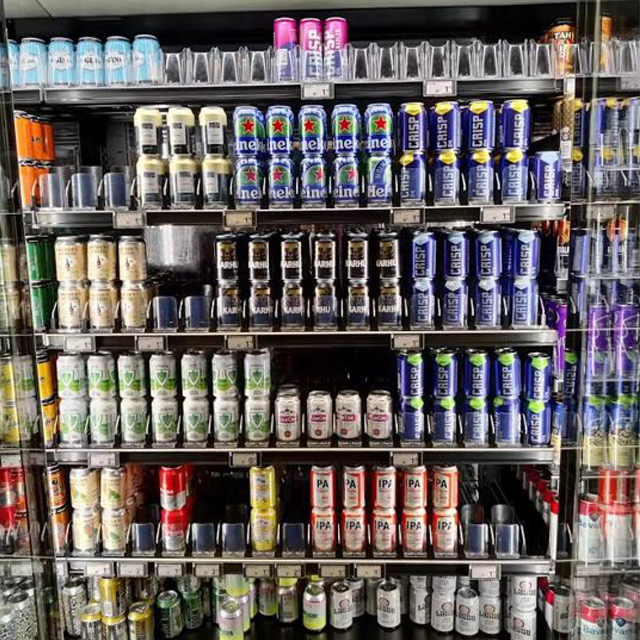
Planning Shelf Space for Beverage Pushers
Measure the Usable Shelf
Measure width and depth after accounting for any rail, label holder and front stop. Set the lane width with the actual bottle base. Then see how many lanes fit without squeezing products together or leaving too little room for shoppers to pick them up.
Separate Bottles and Cans by Fit
Use a divider where neighboring packages could drift into the same lane. Slim cans, broad bottles and multipacks may need different lane widths or a different fixture. Load each lane to its normal depth before approving the plan.
Checking Product Visibility
Keep the Package and Price Readable
Check whether each front label faces the aisle and can be read without moving an adjacent bottle. Match the price strip to each lane so the shopper can tell which price goes with which drink.
View Displays From the Main Route
Walk past the display during normal store hours. At a busy endcap or cooler, glare, door frames and nearby promotions can affect what shoppers see. Catch those obstructions before changing adjacent lanes.
Making Drinks Easy to Reach
Check Clearance Above the Bottle
Remove the tallest bottle with the shelf above and the front stop in place. Leave enough room for a hand to lift it without tipping the next bottle or touching the label rail.
Watch How the Next Drink Advances
Try taking a product from a full lane and from a nearly empty one. Note if the next item twists, jams or reaches the front with enough space for the shopper to grasp it.
Testing Placement Changes in Stores
Start With a Small Placement Trial
Try a new or seasonal drink in an existing lane before changing the full display. Record whether the label is visible, the price is clear and the first bottle can be removed easily.
Record Sales Separately From Display Performance
If you track sales, record the dates, promotions, prices and periods when the drink was actually in stock. A lane trial shows how the fixture presents and moves bottles. Use sales records and comparable conditions to assess a change in purchases.
Replenishment and Date Rotation
Measure How Staff Refill the Lane
Follow one refill from the case to the shelf. Note how many bottles the lane holds and whether staff need to release the pusher to load them. Record the time spent replenishing, straightening and clearing jams alongside the time on the existing shelf.
Keep Stock Checks and Date Rotation
A pusher advances the bottles already in a lane. Staff still need to check stock and dates. If they can load from the back, put new stock behind older bottles. With front-only access, plan the manual rotation needed when replenishing.
Keeping Brand and Pack Labels in View
Use the Fixture to Maintain the Planogram
Use separate lanes for products whose packaging is easy to confuse. From the customer side, check whether the brand, variant and pack size can be distinguished without lifting the bottle first.
Recheck the Setup When the Assortment Changes
When a new size replaces an existing one, check the divider setting and how the package meets the front stop. Move the price and promotional card together with the new lane.
Before Expanding the Setup
Review the Results With Store Staff
Record the successful lane dimensions, pack types and fixture details. Keep a note of any bottles that jam or tip and any cleaning or refill tasks that still need staff attention.
Test Before Ordering for More Stores
Repeat the trial on any shelf with a different profile, cooler depth or bottle mix. Use those results to decide which sections should use the same pusher and which need another layout.