Introduction
Electronic Shelf Labels vs. Traditional Price Tags: Pros and Cons
Compare electronic shelf labels (ESLs) and traditional price tags against the same promotion cycle. Printed tags are inexpensive to replace one at a time. A centralized ESL system may be more practical when hundreds of shelf prices change together.
Include printing, distribution and staff time in the paper-tag calculation. For ESLs, add labels, software, network equipment, mounts and ongoing service. Check shelf-to-till prices after the same set of updates for each approach.
So, which is the superior pricing solution? Are ESLs the future of retail, or do traditional price tags still hold their ground? The answer isn’t as clear-cut as it seems. Let’s break down the true costs, efficiency, and customer experience behind both systems—so you can decide which pricing method will keep your store ahead of the curve.
Understanding the Basics of Pricing Displays Holder
Use the frequency of price changes, the number of labels and the time needed to resolve exceptions to see which system fits each department.
Shoppers expect price accuracy. Retailers demand seamless pricing updates. But behind every price tag lies a strategic decision—should businesses stick with traditional labels or embrace modern digital alternatives?
Let’s break it down.
What Are Electronic Shelf Labels?
Connect electronic shelf labels (ESLs) to the store’s approved pricing data. Staff still need to verify that the labels received the update and show the shelf price for the correct product.
These small digital displays receive an update from the label platform. Check the price at the shelf and at checkout when a discount starts and again when it ends.
🛒 Key Features of ESLs:
✔ Wireless price updates via a central system
✔ Various display types (E-paper, LCD, LED)
✔ Integration with inventory management
✔ Customizable promotions & flashing indicators
But are they the ultimate pricing solution? Not so fast. Let’s look at the alternative.
What Are Traditional Price Tags?
Tried, tested, and familiar. Printed labels have been a retail staple for decades.
They are simple, tangible, and easy to understand. With a quick print and a manual update, store employees can replace outdated prices in minutes. For small businesses or retailers on a budget, this low-cost approach is a practical choice.
🖨 Why Businesses Still Use Printed Labels:
✔ Lower upfront investment
✔ Easy to produce & replace
✔ No reliance on technology
✔ Customizable to any store design
But here’s the problem. Price updates are slow. Human error is common. And let’s be honest—printing thousands of tags every week isn’t exactly eco-friendly.
So, which pricing display reigns supreme? To decide, we must follow the money.
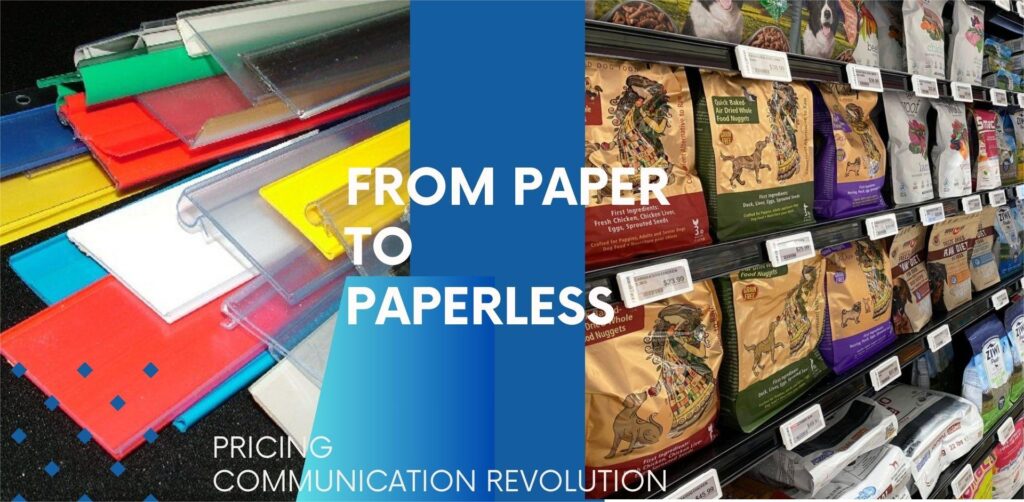
Cost Considerations: Upfront vs. Long-Term Investment
Let’s talk about money—because at the end of the day, every business decision comes down to cost versus value.
Are high-tech digital labels worth the investment, or do classic paper tags still hold financial appeal?
Initial Investment: Comparing Costs
💰 Electronic Shelf Labels:
The biggest downside? The price tag—and no, we’re not talking about the one on the shelf.
Budget for hardware, software and integration. Ask for a quote by label size and quantity and include gateways, mounts, installation and ongoing support for the stores in scope.
But what about traditional labels?
Printed price tags
Budget for printing equipment and consumables. Count the inserts used in a normal week and the time staff spend replacing and checking them.
For businesses operating on tight budgets, the choice seems obvious—but there’s a catch.
Long-Term Savings and ROI
Upfront costs don’t tell the whole story.
Work out the cost per completed price change. For paper, include printing, distribution and shelf checks. For ESLs, include software, hardware service and the handling of missed updates.
What to measure in a pilot
Staff time spent preparing, replacing or correcting tags
Price exceptions found when checking the shelf against checkout
Consumables and replacement parts used over the same period
On the flip side, traditional tags need constant updating. Every sale, every price change, every promotion—that’s another round of printing and replacing.
Compare the upfront installation cost with the running costs you actually record. Use the same stores and price-change periods for both approaches.
But money isn’t the only factor to consider. What about efficiency?
Efficiency and Labor Management
Retail moves fast. Price changes, seasonal sales, limited-time discounts—every second counts.
When it comes to managing these changes, the real question is:
👉 Do you want automation or manual updates?
Manual vs. Automated Price Updates
Printed labels:
Every price change requires human effort. Employees must print, cut, and replace tags manually. The more price adjustments, the more hours spent on repetitive tasks.
Electronic labels
Approve the price file and send it through the system. Review which labels confirmed receipt before closing the change and have staff verify any exceptions.
For businesses that frequently adjust prices—think supermarkets, electronics stores, or fuel stations—ESLs are a game-changer.
Labor Reduction and Productivity Gains
Let’s put this into perspective.
For a fair comparison, select a set of SKUs that change price during a normal promotion cycle. Time the work from approval to shelf verification and record any corrections staff need to make.
With ESLs, count time to assign labels and review update failures. Compare these tasks with printing and replacing paper tags on the same set of shelves.
📉 Traditional Tags:
🚫 Prone to human errors
🚫 Labor-intensive updates
🚫 Time-consuming
Electronic shelf label checks
Compare update time from approval to shelf confirmation
Log price exceptions and how long they take to correct
Measure staff time spent on labeling and service
The verdict? For high-volume retailers, ESLs deliver serious efficiency. But does that mean traditional tags are completely obsolete? Not necessarily.
Customer experience plays a huge role in retail success. Which pricing system keeps shoppers happy? Let’s find out.
Customer Experience and Shopping Convenience
Price matters. But so does the shopping experience.
Whether it’s a quick grocery run or a leisurely browse through a department store, customers want clear, accurate, and easily readable prices. One simple mistake—a mislabeled price or a missing tag—can frustrate shoppers and erode trust.
So, which pricing method provides the best experience? Let’s compare.
Readability and Visibility
Shoppers make split-second decisions. The easier it is to read a price, the faster they buy.
🖨 Printed Price Tags:
✔ Large, bold fonts make them instantly visible
✔ No screen glare—readable in all lighting conditions
✔ Shoppers are familiar with them—no learning curve
📱 Digital Price Displays:
✔ Crisp digital screens with adjustable brightness
✔ Can display additional product details (discounts, promotions, stock levels)
✔ Some offer flashing indicators to highlight special deals
💡 The Issue?
While digital displays are sleek, not all customers like them. Some prefer the familiarity of printed tags. Others find smaller ESL screens harder to read—especially seniors or visually impaired shoppers.
Real-Time Promotions and Price Adjustments
Ever seen a clearance section filled with incorrect prices? It’s frustrating.
For either system, verify when the new price becomes visible and check the till during the changeover.
🖨 Traditional Tags:
🚫 Slow price updates—staff must replace every tag manually
🚫 Prone to errors—some prices don’t match checkout totals
🚫 Short-term promotions require constant tag replacements
Digital displays
Schedule a price or promotion where supported
Confirm the label and checkout show the same approved price
Check support for color or other promotional indicators by model
The takeaway?
For fast-changing promotions, digital labels have the upper hand. But for everyday shopping, some customers still trust the simplicity of printed tags.
Which one wins? It depends on your store’s pricing strategy.
Environmental Impact and Sustainability
Eco-conscious shopping is on the rise. Consumers are paying attention—not just to product prices but also to a store’s environmental footprint.
So, which pricing method is more sustainable?
Waste Reduction and Sustainability Goals
Traditional labels
Count the paper and plastic inserts discarded
Include print supplies and adhesive backings
Check which materials the local waste service accepts
Electronic displays
Ask about expected service life for the model and maintenance assumptions
Track paper displaced by digital updates
Confirm battery and electronics disposal with the installer
Compare paper and printing waste with electronics, batteries and mounts using the same store scope and period.
But what about energy consumption?
Energy Consumption
Sustainability isn’t just about waste—it’s also about energy efficiency.
🖨 Printed Labels:
✔ No electricity required—completely passive system
🚫 Continuous printing consumes resources (paper, ink, shipping)
Digital displays
Check the display and gateway power requirements
Ask for battery life at the intended update frequency
Include battery replacement and disposal in the operating plan
Compare lifecycle inputs
Include paper and print supplies, delivery and installation, ongoing label service and waste handling for each option.
Record the number of tags and updates in your store before estimating the environmental effect of a change.
Integration with Retail Technology
Retail is evolving. Seamless technology integration is now a necessity—not just a luxury.
So, how do pricing displays fit into this digital transformation?
Smart Retail Systems and Automation
Digital labels and store systems
Test the supported connections:
Send the approved price from the pricing platform
Compare the shelf label with the point-of-sale price
Check whether the model supports promotion or product information
Example
A store can schedule a markdown for near-expiry stock if its pricing process supports the change. Staff still check date order and product availability.
But traditional tags? Not so much.
Traditional Pricing and Digital Limitations
🖨 Paper Tags Are Static
🚫 No automation—requires manual updates
🚫 No connection to real-time data—stock levels are unknown
🚫 Prone to pricing mismatches between online and in-store
For retailers operating in a fast-moving environment, manual pricing updates can be a major drawback.
💡 Final Thought?
If your store relies on digital systems, smart labels are the way forward. If you’re running a small, low-tech business, traditional tags may still work just fine.
But as retail moves toward automation, paper pricing will likely become a thing of the past.
Build a Reliable ESL Display System
Install ESL Mounting Rails for Fast and Stable Setup
No solid base, no stable display. ✅
ESL mounting rails help you install labels quickly and keep everything aligned on the shelf. Easy setup, clean look, less hassle.
Use Plastic Holders for Better Label Protection
Keep your labels safe and in place. 🔒
Plastic holders prevent damage, reduce movement, and make replacement quick and simple.
Upgrade Your Shelf Display with Complete ESL Accessories
Don’t stop at labels. ⚡
Combine rails + holders for a smooth, professional display that saves time and improves shelf efficiency.