Introduction: The Key to Higher Sales and Less Waste
Shelf roller tracks can support stock rotation by moving the next pack to the front after a purchase. For dated stock, the refill sequence still matters. Load the newer packs behind the older ones and check whether staff can maintain that order.
Roller track shelving systems can advance compatible products along an approved slope. Evaluate front-facing, refill labor and stock-date handling separately before attributing an improvement to the track.
This guide will break down how automated shelf tracks optimize store operations, drive revenue, and prevent unnecessary losses. Whether you run a grocery store or manage a retail chain, you’ll discover how this simple upgrade can transform your business.
The Science Behind Shelf Roller Tracks
Let’s start with the basics.
A roller track uses gravity and a suitable rolling surface. Check how the actual package moves from the rear of the lane to the stop under full and low stock.
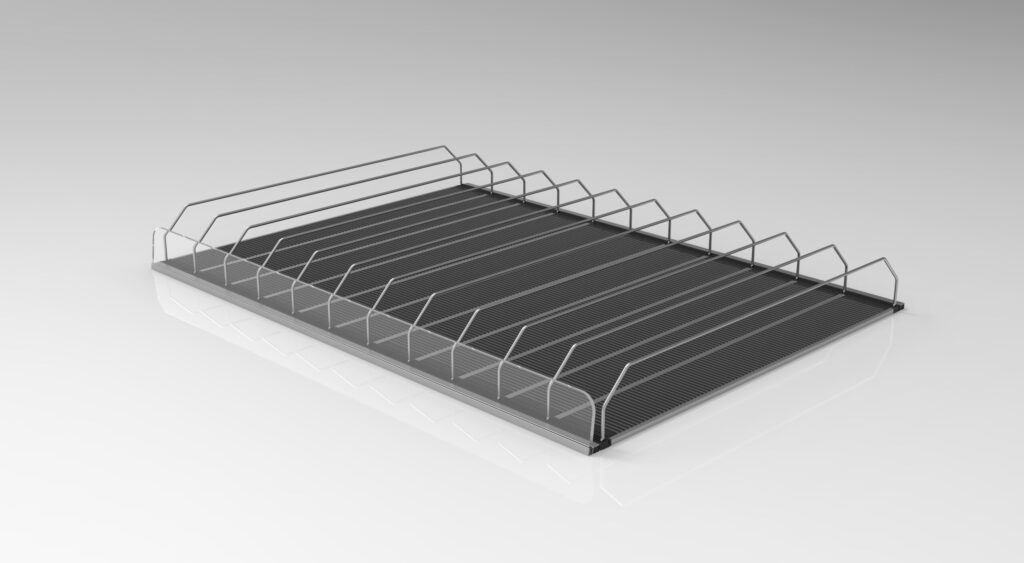
Retailers love this innovation because it saves time, enhances product visibility, and improves the shopping experience. But how does it actually work?
How Gravity-Driven Shelving Works
Ever noticed how drinks in a cooler always seem to slide forward? That’s gravity-fed shelving in action!
🔹 Inclined tracks: Shelves are slightly tilted so products move toward the front naturally.
🔹 Roller or glide sheets: Reduce friction, allowing smooth movement.
🔹 Dividers: Keep products in place and prevent misalignment.
Front-facing shows the next pack when the track feeds correctly. Staff still replenish the lane, check dates and clear jams.
The Psychology of Front-Facing Products
Did you know that shelf placement affects buying behavior?
👀 Eye-level placement sells more: Customers are more likely to grab what they see first.
🛒 Clutter kills sales: Messy shelves overwhelm buyers and reduce impulse purchases.
📌 Neat displays build trust: Well-organized products create a premium shopping experience.
By using roller tracks, retailers keep items front and center, maximizing visibility and increasing sales.
Shelf Roller Tracks vs. Traditional Shelving
Not all shelves are created equal!
✔ Traditional shelving: Requires constant restocking and manual front-facing.
✔ Roller track systems: Products automatically move forward, reducing labor.
✔ Better stock rotation: No more forgotten items hidden at the back of shelves.
Retailers using automated shelf systems see improved efficiency, better sales, and fewer expired products.
How Shelf Roller Tracks Boost Sales
Here’s the big question—how does this system actually increase revenue?
By keeping products visible, accessible, and organized, businesses experience higher sales and better customer satisfaction. Let’s break it down.
Maximizing Product Exposure
Ever noticed how some products seem to sell faster than others? That’s not by accident!
Product position — check the leading pack from the aisle.
Availability — record whether the lane and back room contain stock.
Refill access — time staff adding products to a partly loaded lane.
The more visible an item is, the more likely it is to sell!
Encouraging Impulse Buying
Impulse purchases account for a huge portion of retail sales. But if products are hidden or hard to reach, customers simply move on.
🛍 Grab-and-go mentality: Shoppers are more likely to add items to their carts when products are neatly displayed.
🎯 Strategic product placement: Roller tracks make it easier to highlight promotional or seasonal goods.
📈 Faster decision-making: Clear, organized shelves create a stress-free shopping experience, leading to quicker purchases.
By optimizing shelf organization, retailers create an environment where customers spend more.
Faster Restocking Means More Sales
Time is money—especially in retail!
Facing — record how often staff need to pull stock forward.
Date order — check how stock is loaded and whether older packs remain ahead.
Refills — time the work on the approved fixture.
Record sales only with in-stock time, price, promotion and assortment for the same observation period.
The Role of Shelf Roller Tracks in Waste Reduction
Sales are important, but so is reducing unnecessary waste.
Date checks and replenishment determine whether a roller lane helps the store manage out-of-date stock.
First-In, First-Out (FIFO) Stock Rotation
Food retailers know the struggle—items at the back of the shelf often expire before they’re sold. That’s a big problem!
Load in sequence — place new packs behind older packs where the fixture allows.
Inspect dates — verify the front item is next to sell where required by the store’s workflow.
Measure waste — count expired or damaged units under the same stocking and promotion conditions.
This method is especially crucial for supermarkets and pharmacies that deal with expiration dates.
Minimizing Overstock and Stock Loss
Overordering leads to cluttered shelves and wasted products. Here’s how shelf optimization helps:
✔ Better inventory visibility: Employees can see stock levels at a glance.
✔ Easier restocking: No more misplaced or forgotten products.
✔ Less markdown waste: Items sell before they need to be discounted.
By improving stock flow, retailers can reduce unnecessary losses and keep profits high.
Cutting Down on Labor Waste
Wasted labor means wasted money. Automated shelf systems help businesses:
🔄 Reduce manual front-facing efforts – Employees no longer have to rearrange shelves constantly.
⏳ Save time on inventory checks – A quick glance tells staff what needs restocking.
💰 Lower overall labor costs – Less time spent adjusting shelves means more time for revenue-generating tasks.
With better efficiency, businesses save money while reducing unnecessary work.
Industries That Benefit Most from Roller Track Shelving
Not all industries operate the same way—but many can benefit from this technology!
Supermarkets and Grocery Stores
Freshness matters. Supermarkets need smart shelving solutions to ensure food stays fresh and stocked properly.
🥦 Better organization in produce, dairy, and beverages.
🍞 Minimized food waste with automatic stock rotation.
🛒 Faster restocking in high-traffic aisles.
Convenience Stores and Small Retailers
Limited space? No problem. Small stores need efficient shelf management to make the most of their layout.
📏 Optimized shelf space for grab-and-go items.
💼 Less time spent adjusting displays, more time helping customers.
🔄 Better product turnover for impulse buys.
Pharmacies and Cosmetic Retailers
Pharmacies and beauty stores deal with small, high-value products that need to be well-organized.
💊 Ensuring first-to-expire medications stay at the front.
💄 Keeping beauty products neatly displayed for easy access.
🔎 Reducing misplaced items and improving stock control.
From food to beauty to pharmaceuticals, roller track shelving keeps businesses running smoothly.
Choosing the Right Shelf Roller Track System
Ready to upgrade? Not all systems are created equal.
Understanding Different Track Types
📌 Fixed tracks: Best for stores with consistent inventory.
🔄 Adjustable tracks: Ideal for businesses that change product layouts often.
💡 Hybrid solutions: A mix of both for added flexibility.
Customization for Business Needs
Not every business has the same shelving requirements. Custom features include:
⚙ Modular dividers for different product sizes.
📲 Integration with digital price tags.
🔧 Different materials for durability.
Budget Considerations for Retailers
💰 Upfront investment vs. long-term savings.
📉 ROI comparison with traditional shelving.
📦 Bulk purchasing options for cost-effectiveness.
Investing in better shelf management pays off quickly!
Common Challenges and How to Overcome Them
Let’s be honest—no system is perfect!
While automated shelf tracks make retail operations smoother, a few common challenges can arise. The good news? Most of these issues have easy solutions that keep your shelves running efficiently.
Products Getting Stuck or Jamming
Ever noticed items refusing to slide forward? This is one of the most common problems in shelf management.
🔹 What causes it?
- Overloaded shelves that exceed weight limits.
- Poor alignment during installation.
- Dirt and debris slowing down movement.
🔧 How to fix it?
✔ Ensure weight distribution is even.
✔ Regularly clean tracks to remove dust buildup.
✔ Use high-quality, low-friction rollers for smoother movement.
A simple maintenance routine ensures products slide forward effortlessly!
Choosing the Right Angle for Optimal Movement
Gravity does the work—but only if the shelves are set up correctly!
🔹 Common mistakes:
- Shelves that are too flat don’t create enough movement.
- Shelves that are too steep can cause items to slide too fast or fall over.
🔧 How to fix it?
✔ Test different angles before full installation.
✔ Adjust the tilt based on product weight.
✔ Use dividers to keep items securely in place.
Finding the perfect balance keeps your display neat and functional!
Keeping Shelves Clean and Functional
Inspect rollers and guides for debris that may slow a lane. In a pilot, log stalled lanes and date-order errors alongside product write-offs. That helps identify whether waste changes track with the layout or with another store process.
🔹 Cleaning tips:
✔ Wipe tracks regularly with a dry cloth.
✔ Avoid using harsh chemicals that may damage rollers.
✔ Inspect shelves monthly for signs of wear and tear.
A clean shelving system is a high-performing system!
The Future of Shelf Roller Track Technology
Retail shelving is evolving fast!
New innovations are making automated shelf systems more efficient, high-tech, and eco-friendly. Here’s what’s coming next.
Smart Shelf Systems and AI Integration
Imagine knowing exactly when to restock—before a product runs out!
🚀 What’s new?
- AI-powered sensors track real-time inventory levels.
- Use stock-system alerts, if available, as a prompt to verify the shelf and refill. A roller track does not create stock data.
- Data-driven analytics help retailers optimize stock placement.
💡 Why it matters?
✔ Prevents out-of-stock issues.
✔ Reduces product waste through smarter stock control.
✔ Saves employees time by automating inventory checks.
The future of shelving is smart, connected, and efficient!
Sustainable and Eco-Friendly Materials
Retailers are moving toward greener solutions.
♻️ What’s changing?
- Use of recycled materials in shelving components.
- Reduction of plastic waste in shelving accessories.
- Energy-efficient automation to lower carbon footprints.
💡 Why go green?
✔ Meets environmental standards and regulations.
✔ Attracts eco-conscious shoppers.
✔ Reduces long-term operational costs.
Sustainability is no longer optional—it’s the future of retail!
Digital Price Tag Integration
Say goodbye to manual price updates!
📲 How it works:
- Electronic shelf labels sync with inventory systems.
- Prices update automatically across all store locations.
- Dynamic pricing strategies become easier to implement.
💡 Retailers love it because:
✔ No more printing and replacing paper price tags.
✔ Reduces pricing errors and improves accuracy.
✔ Saves time and streamlines operations.
The combination of automated shelves and digital pricing is transforming modern retail!
Trials for Roller Tracks in Three Store Formats
Use matched shelves to compare what changes after fitting a track.
Record facing, replenishment and write-offs separately so that each trial answers a defined question.
Supermarket Trial for Dated Stock
Baseline questions
- Count products that remain at the rear when a lane appears empty.
- Record expired packs by SKU and date.
- Time existing facing and date-order checks.
Trial setup
- Fit one approved gravity lane and verify the package base and stop.
- Set the fixture at the approved slope and test the intended stock.
- Train staff to load newer packs behind older packs where the fixture permits.
What to record
Expired units as a share of stock handled
Time spent on refills and date checks
Pack jams and delays noted by staff
Review the trial with the same replenishment and promotion records before attributing a change in waste to the track.
Convenience Store Trial for Beverage and Snack Visibility
Baseline questions
- Identify packs hidden by the stop or a neighboring lane.
- Record manual facing hours for the trial shelf.
Trial setup
- Fit a suitable track on the test lane and match the baseline assortment.
- Keep prices and promotional placement comparable.
What to record
Readable product fronts through the shift
Changes in facing time and jams
Availability and sales measured over the same periods
Compare with a similar bay before extrapolating the results.
Pharmacy Trial for Small Pack Handling
Baseline questions
- Record which packages are hard for staff or customers to locate where access is permitted.
- Time the current refacing and refill procedures.
Trial setup
- Fit compatible guides and a front stop, and test which packs can move safely.
- Check organizer dimensions and access rules for the department.
What to record
Staff time facing and refilling
Picking errors and queues for service
Pack stability at full and low stock
Keep the fixture and measured outcomes with the trial record.
How to Implement Shelf Roller Tracks in Your Business
Ready to take the next step? Here’s how to successfully integrate these systems into your store.
Finding the Right Supplier
Not all shelving solutions are created equal!
🔎 What to look for:
✔ A proven track record in the industry.
✔ Customization options for different shelf sizes.
✔ Reliable customer support for installation and maintenance.
💡 Pro tip: Work with manufacturers that offer OEM and ODM services for a tailored solution!
Installation Tips for Maximum Efficiency
Don’t worry—setup is easier than you think!
🔹 Step-by-step process:
1️⃣ Measure shelves and determine the best track angle.
2️⃣ Choose the right track type for your products.
3️⃣ Secure the system in place and test movement.
4️⃣ Train employees on usage and maintenance.
💡 Avoid common mistakes:
❌ Skipping the leveling process.
❌ Overloading shelves with heavy items.
❌ Ignoring regular maintenance.
A well-installed system delivers long-term efficiency!
Getting the Best ROI from Your Investment
Thinking long-term? Here’s how to maximize your returns.
Trial measures
Record in-stock time and changes in offers.
Compare expired and damaged units for matched SKUs.
Measure facing and replenishment time separately.
💡 Expand when ready:
✔ Start with high-traffic sections, then scale store-wide.
✔ Combine with digital price tags for full optimization.
✔ Adjust based on customer shopping patterns.
Investing in better shelving technology pays off in more ways than one!
FAQs About Shelf Roller Track Systems
Still have questions? Let’s clear them up!
Do Shelf Roller Tracks Work for All Types of Products?
🔹 Best suited for:
✔ Packaged food and beverages.
✔ Health and beauty products.
✔ Small boxed items and pharmaceuticals.
🔹 Limitations:
- Not ideal for oversized or oddly shaped items.
- Weight limits vary based on track type.
Are They Easy to Maintain?
✔ Yes! Basic maintenance includes:
- Weekly cleaning of tracks.
- Routine checks for misalignment.
- Replacing worn-out rollers as needed.
How Quickly Do Retailers See Results?
📊 Most businesses notice improvements within weeks!
✔ Faster restocking.
✔ Better product rotation.
✔ Higher sales from better visibility.
Conclusion
Retail success depends on efficiency and organization—and automated shelf systems deliver both.
Use trial records to decide where a shelf roller track helps keep products in reach or supports an existing stock-rotation workflow.
Ready to upgrade? The right shelving solution can transform your store today!