Skip to content

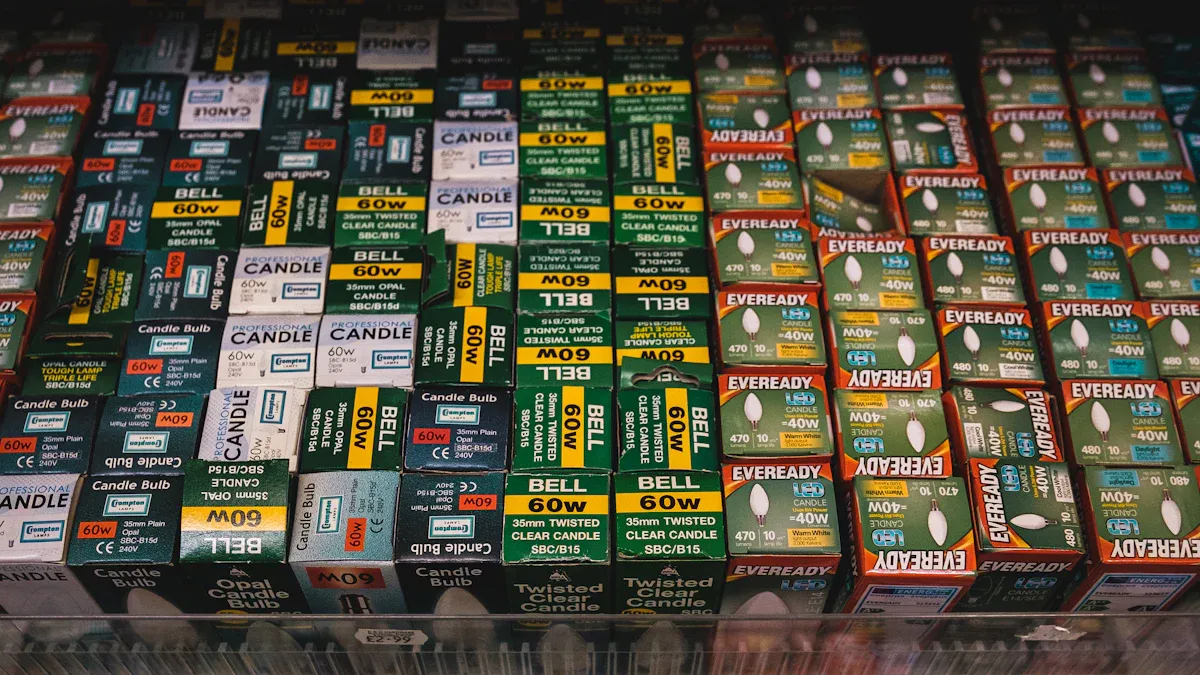
Retailers handle hundreds of cigarette SKUs daily, and you know the problem well. Cigarette brands and types grow fast, but your shelf space stays the same. Strict rules limit how you show products. Demand changes with local tastes, so you cannot stock the same mix everywhere.
Efficiency does not come from luck. It comes from smart category management, well-built planograms, and the right technology. You treat tobacco as a managed category, not a pile of boxes. Data guides your product mix. Good fixtures keep shelves organized.
The sections ahead give you useful plans. You will learn about inventory control, space optimization, rules, and staff training. Each one helps you handle this complex category.
Key Takeaways
- Use just-in-time ordering and automated systems to keep stock low and avoid waste.
- Pick modular display racks that have spring-loaded pushers to save space and time.
- Link your point-of-sale system to electronic shelf labels so prices update in real time.
- Teach workers how to check ages and rotate products to cut down on mistakes and meet the rules.
- Combine smart methods, technology, and people to turn a complex category into profit.
How Retailers Handle Hundreds of Cigarette SKUs: The Core Challenge
The Reality of SKU Proliferation
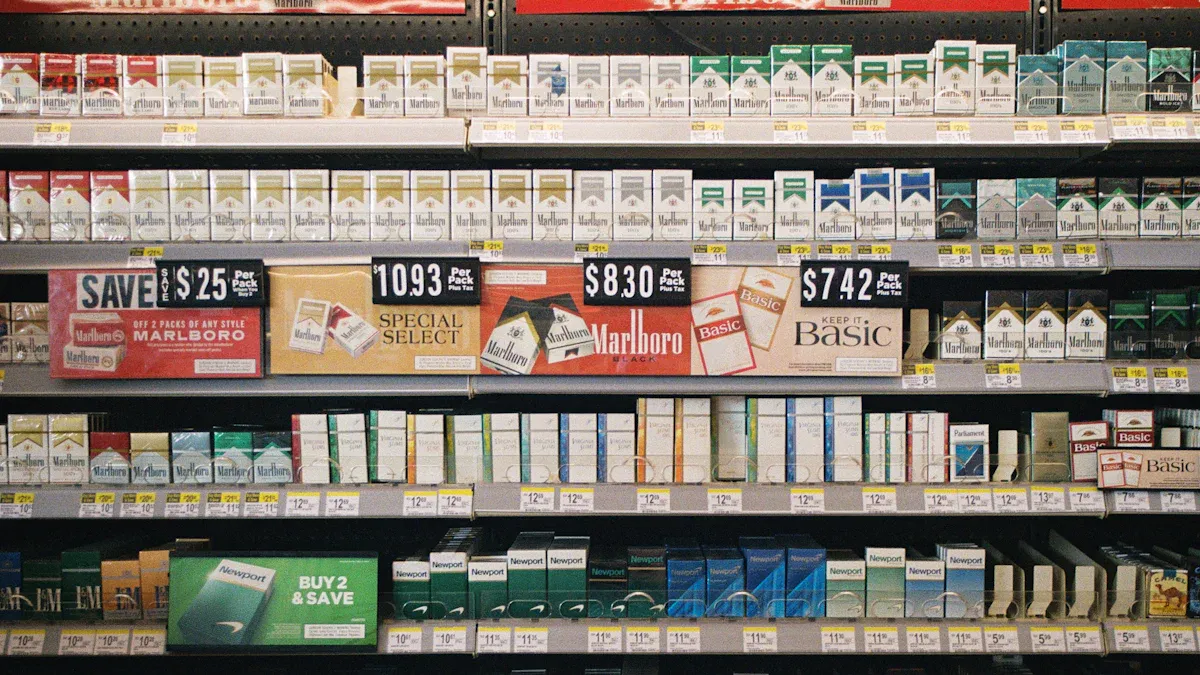
People in different areas have very different likes for cigarette brands and types. A brand that sells well in one city might not sell at all in another. In North America, many smokers stick with the same brand. Most buyers are older and live in cities or suburbs. Specialty stores in these areas make about half of all cigarette sales. Europe works in a similar way. Old, well-known brands are popular in city stores. Shoppers there care more about quality and brand name than buying a lot.
Because of these regional differences, you have to stock many different products. You cannot put the same brands in every store. Younger adult smokers want new flavors. People who care about health look for other nicotine products. Many regular smokers see these as extra choices, not substitutes. Each group wants something different. Retailers carry hundreds of cigarette SKUs because no one group of products works everywhere.
The High Cost of Inefficiency
Bad SKU management wastes both your money and your time. Your money gets stuck in products that do not sell well. You have to pay state tax right away or soon after you get the products. This locked-up tax money puts pressure on your cash flow. If you make mistakes with pricing during tax changes, you might sell products for less than they cost. When you cut cigarette prices to compete, your profit margin shrinks unless customers buy more other items to make up for it.
Pricing errors at the register cause more trouble. It is hard to keep up with tax rates that change in different towns. One wrong price can turn a profit-making category into a loss. Workers waste time looking for products in a messy display. Old products get thrown out. Tobacco company deals and bonuses often decide where products go, making things even more complex. Retailers only manage hundreds of cigarette SKUs well when they keep these hidden costs under control.
Mastering Inventory and Space Management
Inventory Control Techniques
You cannot manage hundreds of cigarette SKUs by guessing. Just-in-time ordering keeps your stock low. You order based on what actually sells instead of filling the back room. This frees up cash and lowers the risk of expired products sitting on your shelves.
Automated replenishment takes this idea further. Modern point-of-sale systems track every sale as it happens. They figure out reorder points based on how fast items sell. For example, a product that sells 15 units per week with a one-week lead time needs a reorder trigger of 30 units. When your on-hand count reaches that number, the system tells you to order 50 more. This removes the guesswork that causes overstocking or stockouts.
Stock rotation is key for products with expiration dates. Always follow the FIFO method: first in, first out. Put newer stock behind older stock. This simple habit stops waste and keeps your inventory fresh. Retailers handle hundreds of cigarette SKUs better when they use these three techniques together: just-in-time ordering, automated alerts, and strict FIFO rotation.
Optimizing Space with Nova-day’s Tobacco Display Rack
Nova-day is a maker of retail display solutions. The company builds fixtures that help you show products clearly and use every inch of shelf space. The Tobacco Display Rack from Nova-day solves the main problem: too many SKUs, too little room.
The rack has a modular design. You can adjust shelves, dividers, and trays to fit different pack sizes. Slim dividers create neat product groups without wasting space. Spring-loaded pushers keep products facing forward at all times. This means your staff spends less time pulling items forward and more time helping customers. The automatic fronting system also boosts visibility, which encourages impulse buys.
Durability matters in a high-turnover category. The rack is made from ABS, PVC, and PET plastics. These materials resist scratches and tampering. They also wipe down fast, so cleaning takes seconds. The spring-loaded pushers are durable and keep products front-facing.
Customization options make this rack a long-term solution for any store layout. You can pick colors, sizes, and setups that match your branding. The rack works in normal temperature environments and in coolers or chillers. This flexibility means you do not need to swap fixtures when your product mix changes.
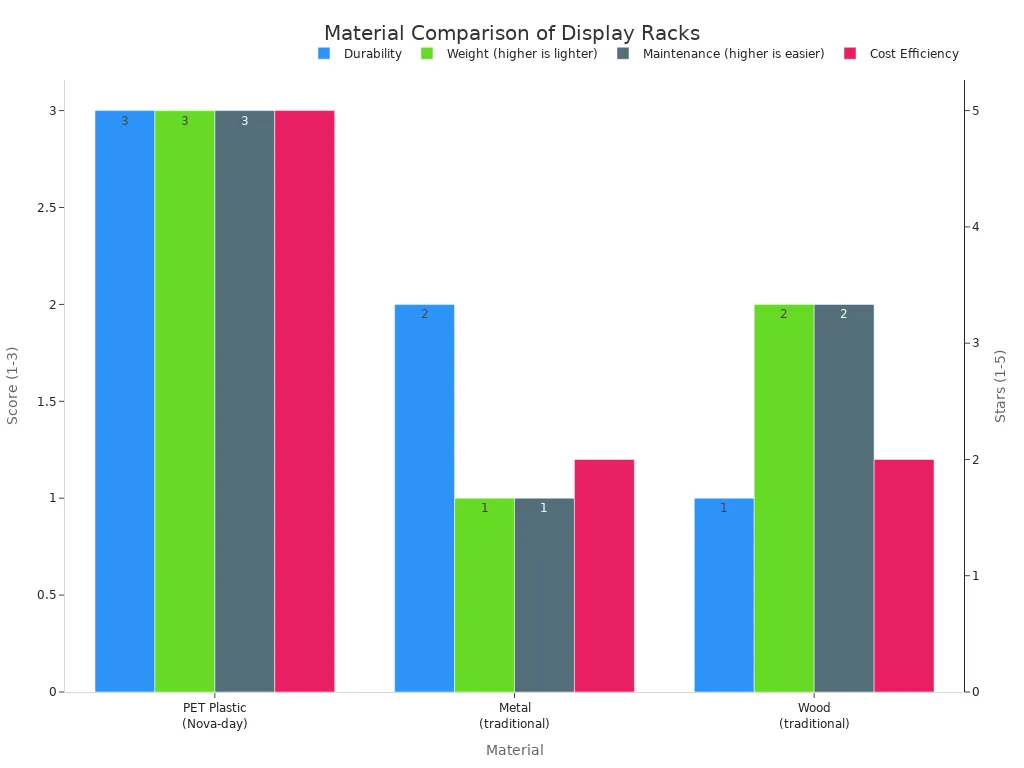
Nova-day racks use ABS, PVC, and PET plastics. These materials stay strong and look clean. You can wipe them down quickly. They do not rust or chip.
The mix of smart inventory control and well-designed fixtures turns a complex category into a manageable operation.
Leveraging Technology for Efficiency

Point-of-Sale and Inventory Software
Your point-of-sale system does more than just record sales. It tracks each product’s inventory. You see which brands sell fast and which do not move. That data tells you what to order and when.
| Aspect | Without POS | With POS System |
|---|---|---|
| Inventory shrinkage tracking | Hard to track; often wrong | Real-time tracking with alerts for differences |
| Sales data visibility | Limited or manual | Real-time tracking of sales volume and shrinkage |
| Product-level tracking | Not precise | SKU-level tracking of each cigarette brand/pack |
| Multi-store oversight | Each store works alone | Central dashboard compares sales, tax, and shrinkage across all sites |
You set reorder levels in the system. When stock hits that point, the software tells you how many to order based on how fast items sell. Some systems let employees log in with fingerprints and scan IDs for age checks. Many link to discount programs from makers like Altria and RJ Reynolds, so you get money back on approved sales.
Smart Integration with Display Fixtures
Software alone cannot fix the space problem. You need fixtures that talk to your system. Nova-day’s Tobacco Display Rack uses snap-on mounts for electronic shelf labels. These labels change prices in real time from your POS. When tax rates change, you do not need a price gun.
The rack also has built-in QR panels. A customer scans a code to see brand info or age checks. Each scan sends data to you. You learn which products get interest and when.
Real-time tracking ties products to their shelves. Barcodes or RFID tags mark each item. Fixed readers track movement automatically. All data goes to one dashboard. The system alerts low stock and finds differences. You get rid of phantom stock because records match what is on the shelf.
Retailers handle many cigarette SKUs best when the shelf itself is part of the work flow. Displays stay neat. Data stays correct. Price changes reach customers right away. Inventory counts happen without staff walking around. This mix of software and smart fixtures saves work, cuts mistakes, and keeps every product in view.
Ensuring Compliance and Empowering Staff
Navigating Regulatory Hurdles
Tobacco selling rules are strict, and a single mistake can cost you your license. You must check photo ID for customers who appear young. Vending machines are restricted in areas where minors may be present. There are no exceptions to age verification laws. These rules apply to every store, every day.
Your display setup can help you follow the rules. Nova-day’s Tobacco Display Rack has sliding panels and lockable trays. These features keep products safe and away from minors. Staff can get items fast during a sale, but customers cannot take products themselves. This design supports responsible selling and lowers the chance of underage access.
Training for Speed and Accuracy
A good training program reduces mistakes and makes service faster. Start with simple routines for restocking and age checks. Teach workers to spot real IDs and handle rejections politely. Use role-play to practice checking IDs and finding fakes. Set your POS to stop tobacco sales until staff finish training.
Feedback matters. Programs that combine retailer training with regular compliance checks have been shown to reduce underage sales significantly. Mystery shopper reports with quick feedback also help performance. Share results across stores so everyone gets better.
An organized display cuts training time. When products are in a clear, logical order, new workers find items fast. They learn spots instead of searching messy shelves. Retailers Handle Hundreds of Cigarette SKUs better when the shelf itself shows the system. Fewer errors, faster service, and better compliance follow.
You now have a clear plan to follow. Treat cigarettes as a managed category. Build planograms using real sales data. Connect your point-of-sale system to your shelves. These steps turn chaos into control.
Efficiency here never comes from one tool alone. It comes from process, technology, and people working together. Ordering rules, smart fixtures, and trained staff each play a part.
Retailers Handle Hundreds of Cigarette SKUs well when every piece supports the others. Fixtures like Nova-day’s Tobacco Display Rack cut costs, save time, and protect compliance. Your customers find products faster. Your staff make fewer mistakes. A hard category becomes a profitable one.
FAQ
How many cigarette SKUs should a typical store carry?
You should stock based on what people nearby want to buy, not a set number. Watch which brands sell fast in your area. Use POS data to drop slow sellers. Tastes differ by region, so your mix will not match other stores.
What is the best way to rotate cigarette stock?
Follow FIFO: first in, first out. Put newer packs behind older ones. This easy habit stops expired products and cuts waste. Your staff should check dates every time they restock.
Can display fixtures really reduce restocking time?
Yes. Spring-loaded pushers keep products facing forward on their own. Your staff spends less time pulling items forward. Nova-day’s Tobacco Display Rack uses this system, so you restock faster and make fewer manual adjustments.
How do electronic shelf labels help with tobacco compliance?
Electronic shelf labels update prices in real time from your POS. When tax rates change, you avoid pricing errors at the register. This protects your profit margin and keeps you compliant with local regulations.
What features should I look for in a tobacco display rack?
Look for modular design, slim dividers, and spring-loaded pushers. Durable materials like ABS, PVC, and PET resist wear. Lockable trays and sliding panels support compliance. Customizable options help the rack fit your store layout.